Thaiyiddy : Rule of Law or Witness to Occupation?
“There is no space to demolish the illegal Tissa Vihara in Thaiyiddy,” declared Minister R. Chandrasekaran during the Jaffna District Coordinating Committee meeting held on December 26, 2025. To make matters worse, during a discussion held on January 10, 2026, the chief monk of the Tissa Vihara and representatives from the Sri Lankan Ministry of Buddhasasana categorically refused to release even a portion of the occupied lands. This stance clearly signals that the NPP Government is not ready to return land to its rightful owners or to dismantle Sinhala-Buddhist majoritarianism from the structure of the State.
Sri Lankan President Anura Kumara Dissanayake has previously showered the public with promises, asserting that the government is committed to returning land to the people. He made these assurances on multiple platforms: including the Jaffna District Coordinating Committee meeting held on January 31, 2025; at the NPP public rally in Kilinochchi on April 26, 2025; and at the opening of the Regional Office of the Immigration and Emigration Department in Jaffna on September 1, 2025.
The NPP government has now been in power for over a year. Despite their manifesto pledges and platform rhetoric promising to “ensure the rule of law,” they appear unwilling to implement this in the case of the Thaiyiddy occupation. The promises made by Anura to return land to the people remain unfulfilled.
While the rightful landowners are protesting holding valid ownership deeds, a vihara has been erected upon their occupied land. On one hand, the Valikamam North Pradeshiya Sabha (Local Government) has been obstructed from performing its legal duties against unauthorized constructions. On the other hand, the chief monk of the occupying vihara has received a promotion, while recent arrests of activists have further complicated the situation.
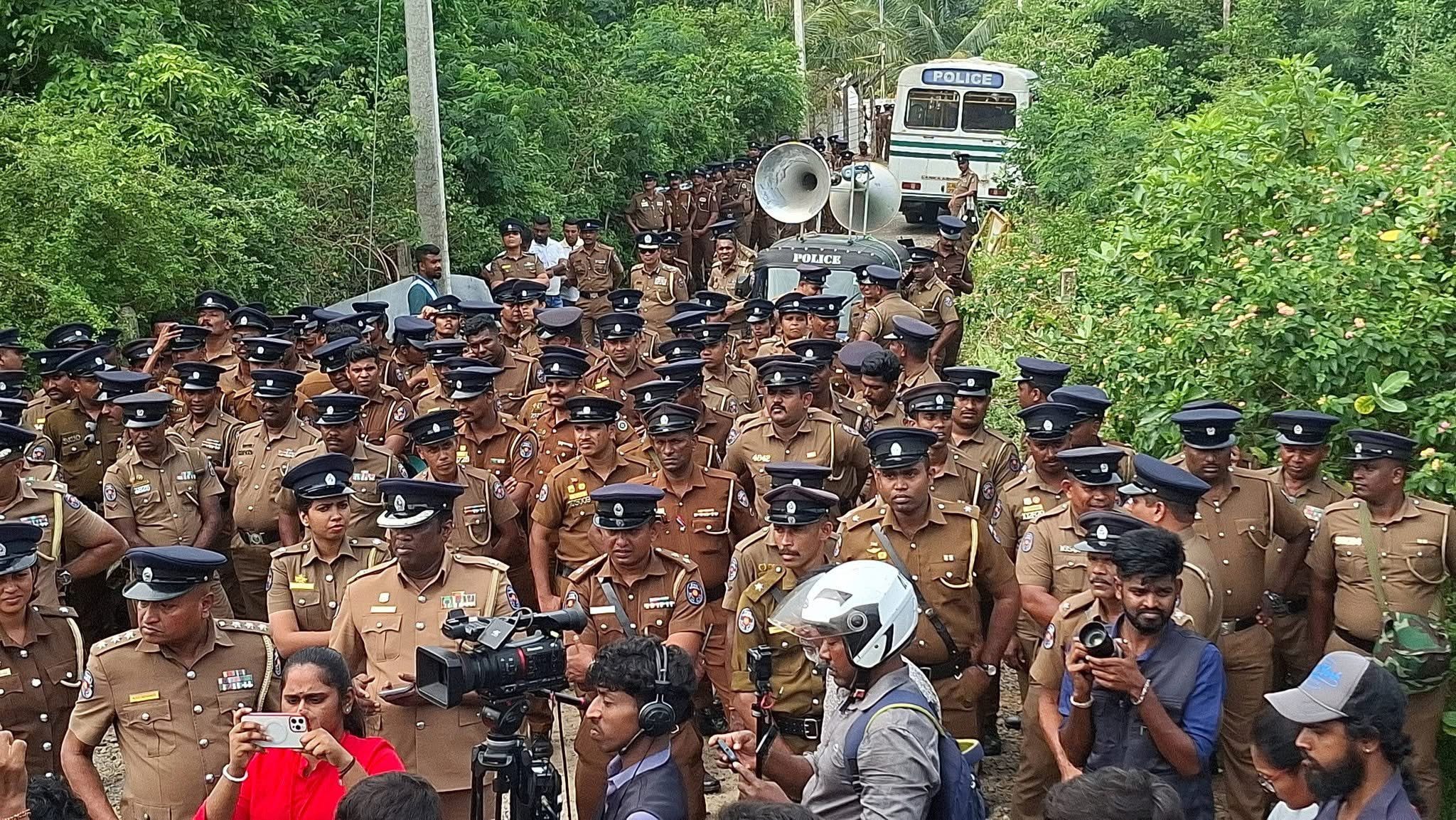
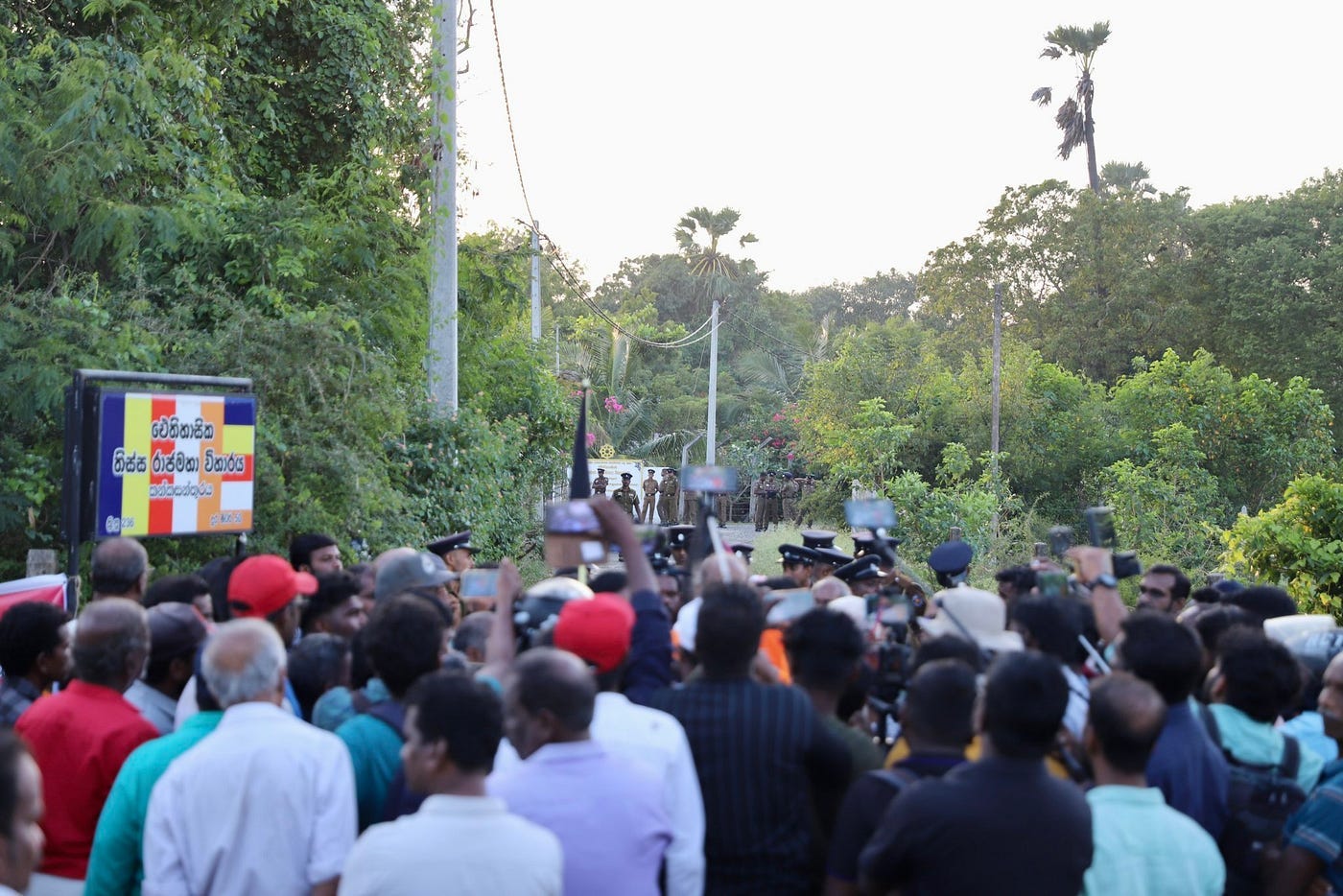
Even the chief monk of the Nainativu Naga Vihara has recorded his opposition, stating that the “Tissa Viharaya was built by encroaching on people’s lands, is illegal, and was built despite knowing that the people had valid deeds.” In this context, the Valikamam North Pradeshiya Sabha (Local Government), which has jurisdiction over the area, passed a resolution to declare the site an illegal construction and to install signboards in three languages. It is noteworthy that no action has been taken against the Sri Lankan police officers who obstructed the council members from carrying out their lawful duties.
During negotiations organized by the Ministry of Buddhasasana to reach a compromise, it was proposed that the vihara remain while the surrounding lands be released, shifting the site from military control to the Department of Buddhist Affairs. However, the rightful landowners stand firm in their demand for the full return of their ancestral lands and the removal of the vihara, resulting in a failure to reach any agreement.
Minister R. Chandrasekaran had announced at a Divisional committee meeting of the Valikamam North on June 12, 2025, that compensation or alternative land might be provided to those whose lands were occupied by the illegal vihara. He clearly stated “no space to demolish the Vihara” during the Jaffna District Coordinating Committee Meeting held on December 26.
Providing alternative land will not be a viable solution unless the landowners accept it. In this complex situation, the NPP government has only two possible approaches.
The first is to uphold the law by removing the illegally constructed vihara and returning the land to its owners. However, this would face massive opposition in the South, and the Sinhala-Buddhist majoritarian mindset would unlikely allow space for that.
The second approach is to maintain the vihara as it is. Choosing this path, which aligns with Sinhala-Buddhist interests, is the more convenient option for the NPP government. Such a choice would demonstrate that within the Sri Lankan state structure, Sinhala-Buddhist majoritarianism carries more weight than law or ethics.
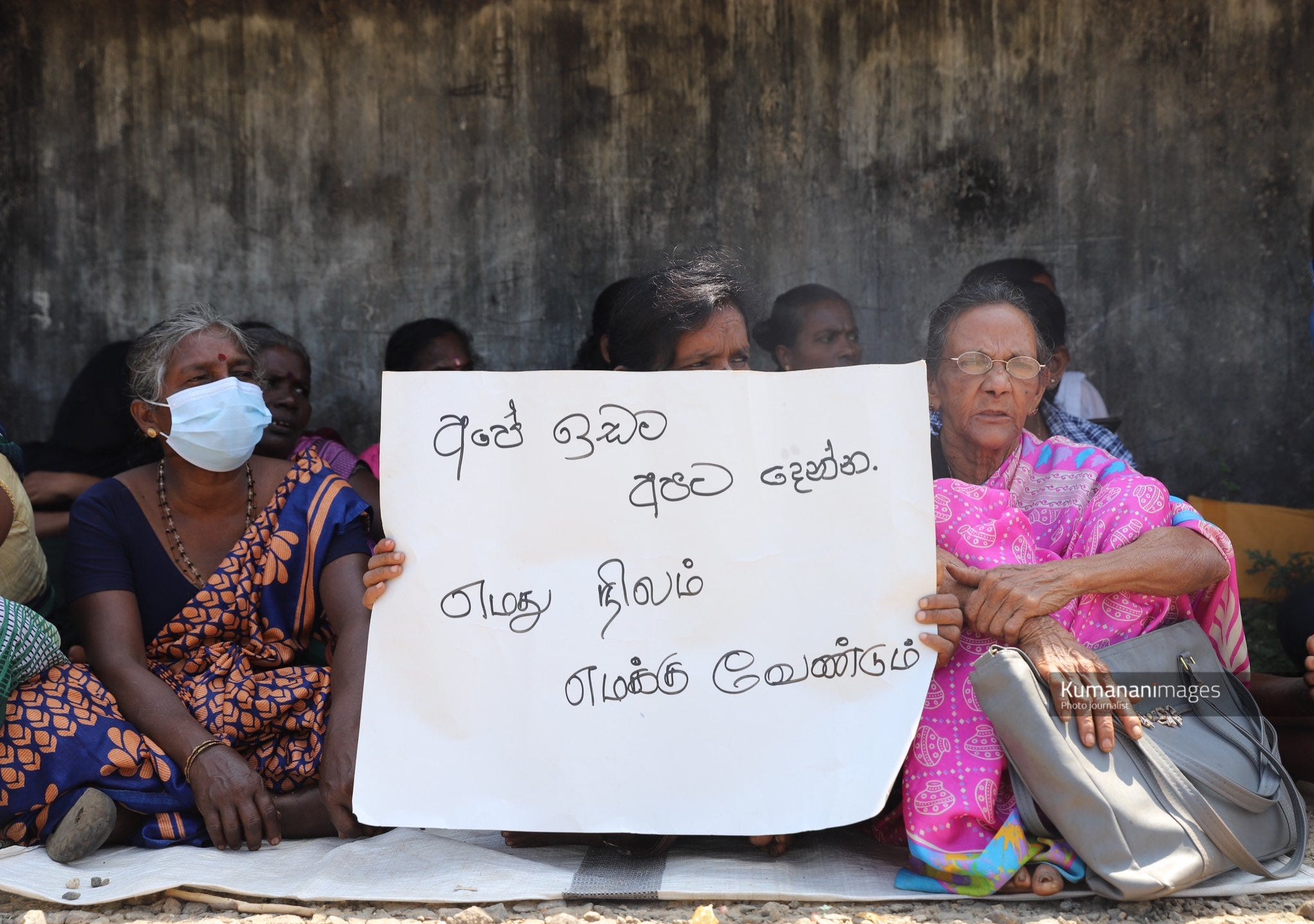
It is evident that the NPP government does not intend to remove the vihara in practice. Their primary challenge is the moral and peaceful protest of the landowners and activists. The Anura administration has opted for the strategy of releasing a mere 2 acres of land to weaken the collective strength of the people. This is a typical tactic used by capitalist states to dampen the intensity of land rights protests and to divide the people.
Although Minister R. Chandrasekaran stated that the Tissa Vihara was not built during their government and acknowledged it sits on private land, he announced their government’s stand is to provide compensation. While the NPP claims to bring change to the political culture, anti-corruption, and the rule of law, this appears to apply only to the South. Thaiyiddy confirms that their approach to the North-East remains confined within a structure of Sinhala-Buddhist majoritarianism.
The NPP government took office promising to implement the rule of law, but is now engaged in actions that attempt to regularize and legalize an illegal occupation. This has created a sense of fear among Tamils whose lands remain occupied or who are displaced. Similarly, their struggles may also be settled in the future without justice.


Comments
Post a Comment